Inspection
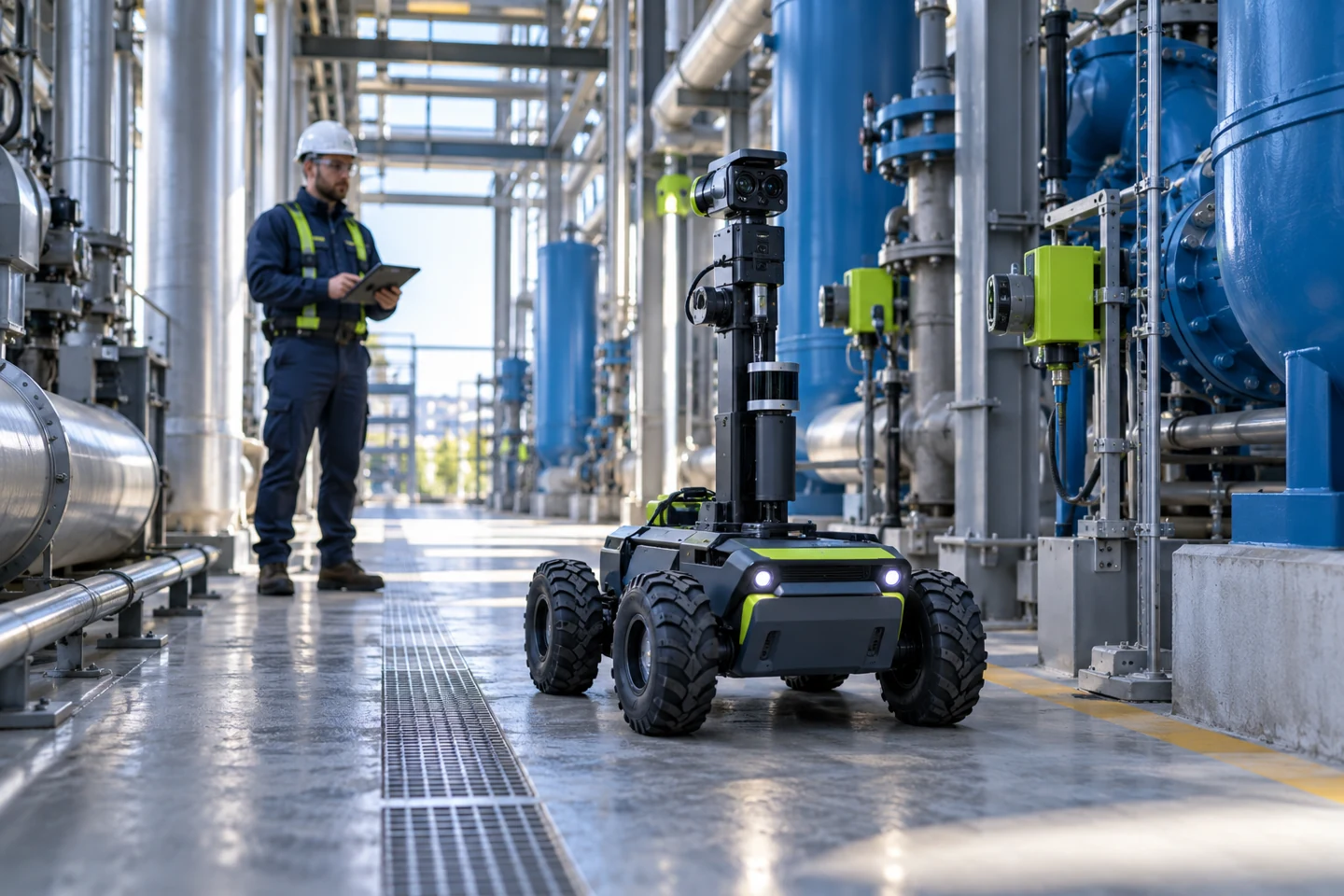
Use sensing and mobility to identify leaks, heat, wear, damage, obstruction, and abnormal conditions.


Popular
All languages
Your preference is saved. Some pages may still appear in English while translations are added.
RESEARCH / ROBOTICS & AUTOMATION
Vexium’s robotics direction explores inspection, repetitive work and selected service applications across infrastructure. The focus is practical machines that fit real environments and improve the work of the people responsible for them.
THE STORY BEHIND THE SYSTEM
Equipment access, lighting, terrain, weather and communication conditions shape what a robot can observe and how safely it can move. The useful question is which task can be completed with reliable evidence and appropriate oversight. Vexium is examining those requirements alongside controls, maintenance and operating procedures, with robotics treated as part of a larger infrastructure process rather than a standalone spectacle.
CONNECTED CONSIDERATIONS
RESEARCH / ROBOTICS & AUTOMATION
Use sensing and mobility to identify leaks, heat, wear, damage, obstruction, and abnormal conditions.
Support technicians with remote presence, diagnostics, tools, documentation, and repeatable procedures.
Coordinate materials, components, cargo, site movement, and selected hazardous or repetitive tasks.
ON THIS PAGE
THE VEXIUM APPROACH
A photograph, measurement or exception becomes useful when it can be associated with the right asset and reviewed in context. Approved digital integrations can support that connection. Robotics research does not imply an autonomous repair capability or a deployed Vexium field fleet. Our direction is to help qualified people inspect, understand and service infrastructure through capabilities that can be tested against actual work.
RESEARCH
The strongest early use cases reduce exposure, improve inspection consistency, or extend skilled teams rather than replace judgment indiscriminately.
RESEARCH
Reliable systems combine perception, localization, planning, controls, communications, and safe-state behavior around people and infrastructure.
RESEARCH
Deployment also requires charging or fueling, maintenance, spare parts, secure connectivity, work-order integration, training, and accountable supervision.
RESEARCH
Remote, industrial, water-constrained, and harsh-environment pilots can build knowledge relevant to disaster response, remote infrastructure, and future space operations.
WHAT FUELS YOU FUELS US